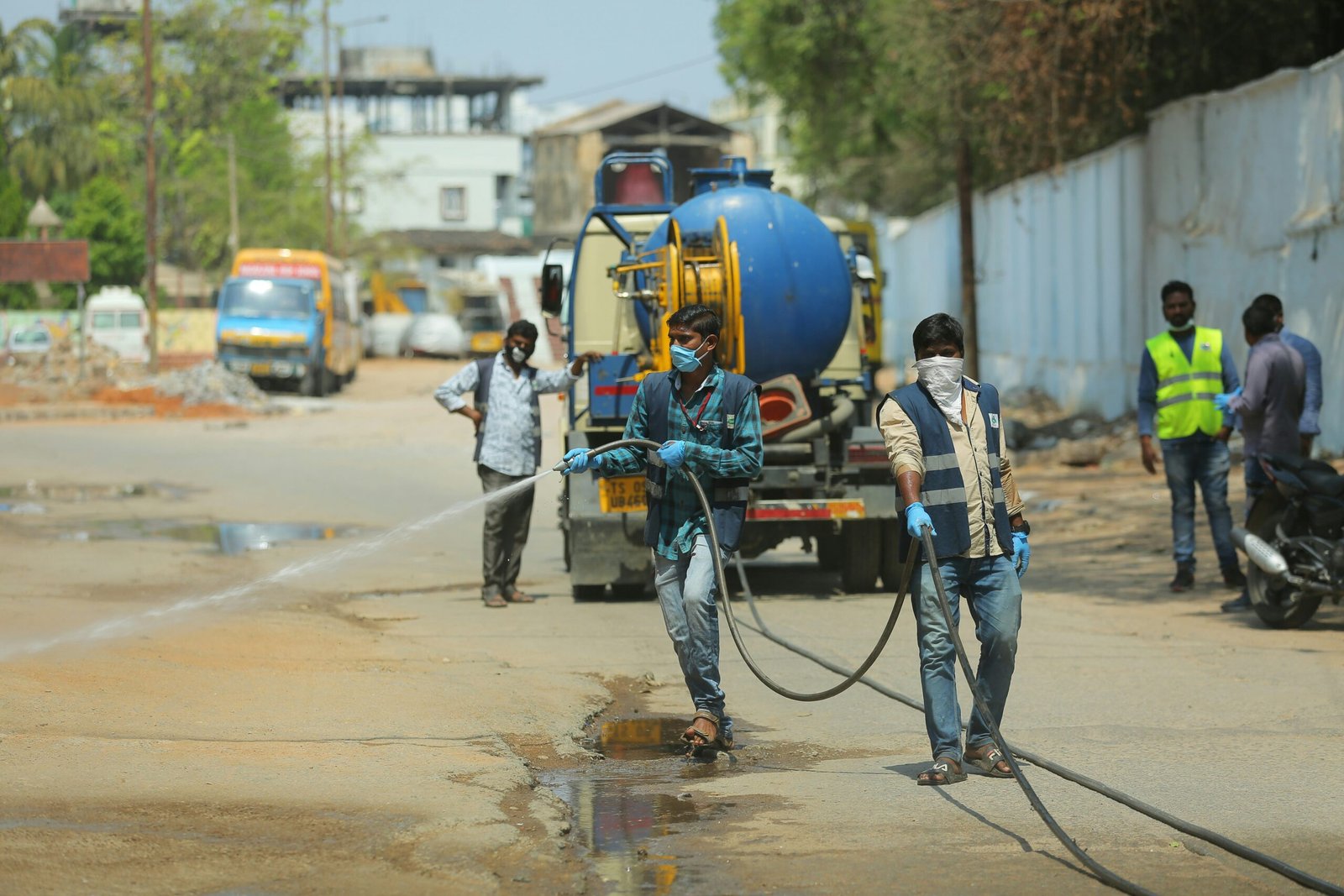
Expanding water and sewer networks is an expensive undertaking, and those costs inevitably show up in our utility bills. We’re talking about significant investments in infrastructure, covering everything from materials and labor to regulatory compliance and ongoing maintenance. This isn’t just about adding new pipes; it’s also about upgrading aging systems and meeting evolving environmental standards.
Several core factors contribute to the escalating price tag of water and sewer expansion and maintenance. These aren’t isolated issues but often interconnected, creating a complex financial challenge for utility providers and, ultimately, for consumers.
Materials and Labor
The cost of digging trenches, laying pipes, and constructing treatment plants isn’t static. We’ve seen a steady increase in the price of raw materials like steel, PVC, and concrete. Alongside this, skilled labor for these specialized tasks is becoming more expensive and harder to find.
- Supply Chain Disruptions: Recent global events have highlighted the fragility of supply chains, leading to price volatility and delays for essential components.
- Specialized Workforce: Operating and maintaining modern water and wastewater facilities requires a highly trained workforce, commanding higher wages.
Aging Infrastructure
Many existing water and sewer systems in North America are decades, if not a century, old. These systems weren’t built to handle current population densities or climate challenges. Replacing or rehabilitating them is a monumental, costly, and continuous task.
- Pipe Replacement: Older pipes are prone to leaks, breaks, and corrosion, leading to water loss and potential contamination. Replacing these mains is a standard but expensive part of the budget.
- Treatment Plant Upgrades: Older treatment plants often need significant upgrades to meet stricter environmental regulations and handle increased flow volumes.
Regulatory Compliance
Environmental regulations are becoming more stringent, especially concerning water quality and wastewater discharge. Meeting these standards often requires new technologies, additional treatment steps, and more rigorous monitoring, all of which add to the cost.
- PFAS Compliance: The emerging issue of Per- and Polyfluorofluoroalkyl Substances (PFAS) in water supplies is a significant new financial burden. The EPA estimates that PFAS compliance could add approximately $1.5 billion per year nationally to water and wastewater utility costs. This includes investing in specialized filtration systems and monitoring technologies.
- Stormwater Management: Regulations around stormwater runoff separation and treatment are also driving costs, particularly in older cities where combined sewer overflow (CSO) systems are still common. For instance, in Brentwood, MO, significant sewer separation projects are planned, with construction starting in 2026, directly addressing these regulatory pressures.
The Impact on Utility Bills: Real-World Examples
These underlying cost factors translate directly into higher rates for households and businesses. It’s not just about covering daily operational expenses; a significant portion of your bill goes towards these large-scale infrastructure investments.
Residential Rate Hikes
Across the board, communities are seeing noticeable increases in their water and sewer bills. These aren’t minor adjustments; they represent substantial shifts in household budgets.
- Birmingham, MI (2025-2026): This is a stark example. Water rates are set to increase by 20% (from $7.38 to $8.87 per 1,000 gallons), and sewer rates by 14% (from $11.26 to $12.88 per 1,000 gallons). Stormwater fees are also rising by 12% or 1%, depending on specific parameters. These increases are primarily driven by a 91% sewer infrastructure replacement budget amidst rising material and labor costs. The average household can expect an additional $280 per year on their utility bill.
- San Francisco, CA (Proposed FY2027-28): San Francisco is looking at approximate increases of 12.6% in 2027 and 12.5% in 2028 for water and sewer services, if approved. This would translate to an average household bill increasing by about $21 per month in 2027 and another $23 per month in 2028. These funds are vital for replacing aging mains and implementing seismic upgrades to their vital infrastructure.
Connection Fees
For new developments or properties connecting to the municipal network, there are often substantial one-time connection fees. These fees help cover the immediate costs of extending the network to serve new customers and contribute to the overall system’s capacity.
- Murphy, NC (2025-2026): This municipality has set new water and sewer connection fees as part of a five-year system development fee update. For example, a ¾-inch water tap will cost $900, while a 1-inch tap will be $1,200. These fees are direct contributions from new users to the expansion and enhancement of the network they will utilize.
National Perspectives and Future Trends

Looking beyond individual communities, the scale of investment needed nationwide paints a clear picture of persistent financial pressure. The sector is, however, adapting with new strategies to manage these costs.
Enormous National Needs
The sheer volume of necessary work is staggering. The Environmental Protection Agency (EPA) estimates that the U.S. needs $630.1 billion over 20 years to meet wastewater infrastructure needs alone. This isn’t just about replacing old pipes; it’s about expanding capacity for growth, improving treatment, and safeguarding public health.
- Major Projects on the Horizon: Numerous significant projects are slated for the mid-2020s. For instance, Sandpoint, ID, is planning a $130 million bond for a new treatment plant. Josephine, TX, is looking at a significant expansion of its wastewater treatment capacity to 1.5 million gallons per day (MGD), with construction projected for 2028. These are not isolated projects; they represent a widespread trend of necessary investment.
Evolving Financial Approaches
Utilities are exploring various avenues to finance these massive undertakings without placing an undue burden on current ratepayers. The goal is to spread costs over time and leverage diverse funding sources.
- Flexible Financing: There’s a growing shift towards more flexible financing mechanisms beyond traditional municipal bonds. This includes public-private partnerships, state revolving funds, and innovative loan programs designed to offer better terms and reduce immediate financial strain.
- Performance-Based Models: Some utilities are moving towards performance-based contracts for certain services, where payment is tied to achieving specific outcomes, encouraging efficiency and innovation from contractors.
- Service Models Spreading Costs: Instead of large upfront capital expenditures for certain technologies or equipment, utilities are exploring service models that spread operating and maintenance costs over the lifetime of the asset, similar to a subscription service. This can help budget for expenses more predictably.
Decentralized Systems
For specific applications, especially in less densely populated areas or for industrial users, decentralized wastewater treatment systems are gaining traction. These systems treat wastewater closer to its source rather than channeling it through extensive pipe networks to a central plant.
- Reduced Infrastructure Footprint: This approach can significantly reduce the need for long and expensive sewer lines, especially in areas with challenging topography or sparse population density.
- Resource Recovery: Decentralized systems can also be designed to recover resources like treated water for irrigation or nutrients, offering additional environmental and economic benefits.
Operational Realities and Outlook

The continuous need for investment and the ongoing operational complexities mean that budget pressures are unlikely to disappear. Utility providers are constantly balancing necessary upgrades with the affordability for their customers.
Maintaining Stability Amidst Costs
Despite the significant financial demands, the water and wastewater sector generally remains quite stable. Rating agencies like Fitch, while acknowledging persistent capital needs, revised the U.S. water/sewer sector outlook to neutral in October 2025 for 2026. This indicates that while costs are high, utilities are generally managing to maintain financial health and provide essential services. The normalization of operating costs, despite the continued capital requirements, contributes to this stability.
- Ongoing Rate Adjustments: Utilities, such as MetroConnects, are continually reviewing and adjusting their rates to align with operational costs and capital improvement plans. For example, MetroConnects announced wastewater rate changes taking effect on January water bills in 2026, a common practice to ensure financial solvency.
The Bottom Line
| Cost Category | Estimated Cost |
|---|---|
| Water and Sewer Pipes | X million |
| Labor and Construction | Y million |
| Permitting and Regulatory Compliance | Z million |
| Land Acquisition | A million |
| Engineering and Design | B million |
The expansion and maintenance of water and sewer networks are essential public services that come with a hefty price tag. The trend of rising utility bills is a direct reflection of these significant investments in infrastructure, regulatory compliance, and modernization. While these costs can feel burdensome, they represent the ongoing commitment to ensuring reliable access to clean water and effective wastewater management, services critical to public health and economic stability. Understanding the drivers behind these costs can help communities and individuals engage more effectively in discussions about infrastructure planning and responsible resource management.
FAQs
What are the main factors that contribute to the cost of expanding water and sewer networks?
The main factors that contribute to the cost of expanding water and sewer networks include the distance of the expansion, the terrain and soil conditions, the need for additional infrastructure such as pumping stations or treatment plants, and the cost of materials and labor.
How does population growth impact the cost of expanding water and sewer networks?
Population growth can impact the cost of expanding water and sewer networks by increasing the demand for water and sewer services, which may require larger capacity infrastructure and more extensive network expansions to meet the needs of a growing population.
What are some potential cost-saving measures for expanding water and sewer networks?
Potential cost-saving measures for expanding water and sewer networks include utilizing existing infrastructure where possible, implementing efficient design and construction techniques, and exploring alternative funding sources such as public-private partnerships or grants.
What are the long-term economic benefits of expanding water and sewer networks?
The long-term economic benefits of expanding water and sewer networks include improved public health and sanitation, increased property values, support for economic development and growth, and the potential for cost savings through more efficient and sustainable water and sewer systems.
How do environmental regulations impact the cost of expanding water and sewer networks?
Environmental regulations can impact the cost of expanding water and sewer networks by requiring compliance with specific standards for water quality, wastewater treatment, and environmental protection, which may necessitate additional investments in infrastructure and technology to meet regulatory requirements.